CML USA, Inc.
North American Office of Ercolina® Tube Benders
EN180 Pipe & Tube Notcher | Abrasive Belt Notching
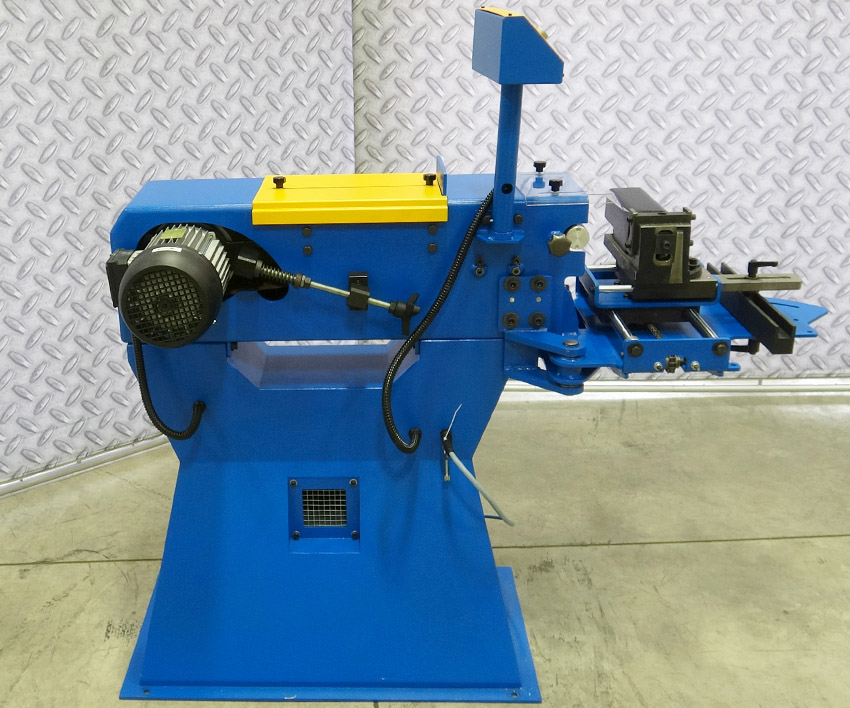
EN180: abrasive belt notching for straight and angled joints
The Ercolina EN180 pipe and tube notcher shapes saddle, fishmouth and coping profiles for weld fit-up. Its published tube capacity is 1–4½ inches, with a graduated 0–60° vise and vertical adjustment for offset angles. Use it for handrails, frames and fabrication where a consistent mating profile can reduce repeated freehand grinding.
For work at the EN180’s maximum capacity, consult CML USA with the material, wall thickness and joint geometry before ordering.
EN180 Universal Tube and Pipe Notcher: Capacity 1″ to 4-1/2″ Tube
Electrical Options:
220V or 480V Three Phase


THIS VIDEO SHOWS ERCOLINA’S EN180 PIPE & TUBE NOTCHER IN ACTION!
Ercolina’s EN180 Pipe and Tube Notcher is ideal for hand railing, chassis and roll cages, fences and gates, furniture frames, marine rails and arches, tubing and plumbing for restaurant and dairy.
See the machine’s clamping, feed and notching process in the demonstration above. Results and cycle time depend on material, dimensions, abrasive selection and operator setup.

- Notch angles to 60° in pipe or tube up to 4½″ (Consult factory for application information at maximum capacity.)
- Replaces outdated notching methods using hole saws, end mills, grinding wheels and flame cutting
- Patented simultaneous infeed and crossfeed action extends belt life and reduces heat
- Uses premium abrasive belts for a wide range of materials including; carbon steel, stainless steel, Inconel, chrome-moly, aluminum and titanium
- Graduated vise 0-60° with vertical adjustment for offset angles
- Patented Quick Change roller system
- Converts to abrasive belt grinder with optional accessory
- Top mounted deburring surface
- Over 25 notcher rollers available
- Tool free belt changeover


Questions about straight and angled tube notching
What is a fishmouth, saddle notch or cope?
These terms describe the curved recess in the end of a tube or pipe that fits against a mating round member. A controlled abrasive-belt notch can reduce hand grinding and fit-up work compared with shaping each joint freehand. Final clearance and weld preparation must follow the drawing and welding procedure.
Can I notch straight and angled joints?
Yes. Use the appropriate roller and vise setup for a straight-on cope or an angled intersection. The EN100 and EN180 list a graduated vise adjustment of 0–60° and vertical adjustment for offset angles. The vise scale is not a promise that every finished joint geometry is possible: confirm the relationship between the drawing, vise setting and available clearance, then check a sample part.
How do I notch one tube diameter to another?
Select the roller to suit the outside diameter of the mating member, not simply the tube being notched. Change the roller when the required mating diameter changes. Confirm the correct roller, belt and clamping setup with CML USA; over 25 notcher rollers are listed for these machines.
Can I notch steel, stainless steel and aluminum?
The published applications include carbon steel, stainless steel, chrome-moly, aluminum, titanium and Inconel with suitable abrasive belts. Belt selection, feed and dust handling must suit the material. Avoid carbon-steel contamination when preparing stainless steel. Follow the machine instructions and approved dust-control procedures; do not mix incompatible metal dusts.
EN100 vs. EN180: Which tube notcher fits your shop?
- EN100 pipe and tube notcher: published tube capacity 1–3 inches. A practical choice for handrails, gates, frames and general fabrication within its working range.
- EN180 pipe and tube notcher: published tube capacity 1–4½ inches for larger tube applications. Consult CML USA for application approval at maximum capacity.
Both models list a graduated 0–60° vise, vertical adjustment for offset angles, Quick Change rollers, tool-free belt changeover and a top-mounted deburring surface. Both list 220V or 480V three-phase electrical options; confirm the configuration when ordering. An optional accessory converts the machine for abrasive belt grinding.
Tube outside diameter is not nominal pipe size. Specify the actual outside diameter, wall thickness, material and joint angle so we can confirm machine capacity and roller selection.
Build a practical cutting, bending and notching workflow
Cut the blank square, deburr it, bend to the drawing where required, then locate and cope the joint in the sequence your part requires. A Pedrazzoli Super Brown cold saw, Ercolina Top Bender or Super Bender, and an EN-series notcher can form a practical handrail fabrication setup. Check clamping access for already-bent parts before selecting the production sequence.
Read the EN100 notcher and handrail production buyer’s guide for fit-up and workflow considerations.
Ask CML USA to match the notcher to your application
Send the material, actual outside diameter, wall thickness, mating diameter, joint angle, required quantity and available electrical supply. Include a drawing or sample-part photo, especially for offset joints or maximum-capacity work.
Request an EN100 or EN180 quote and application review · Compare Ercolina tube and pipe notchers